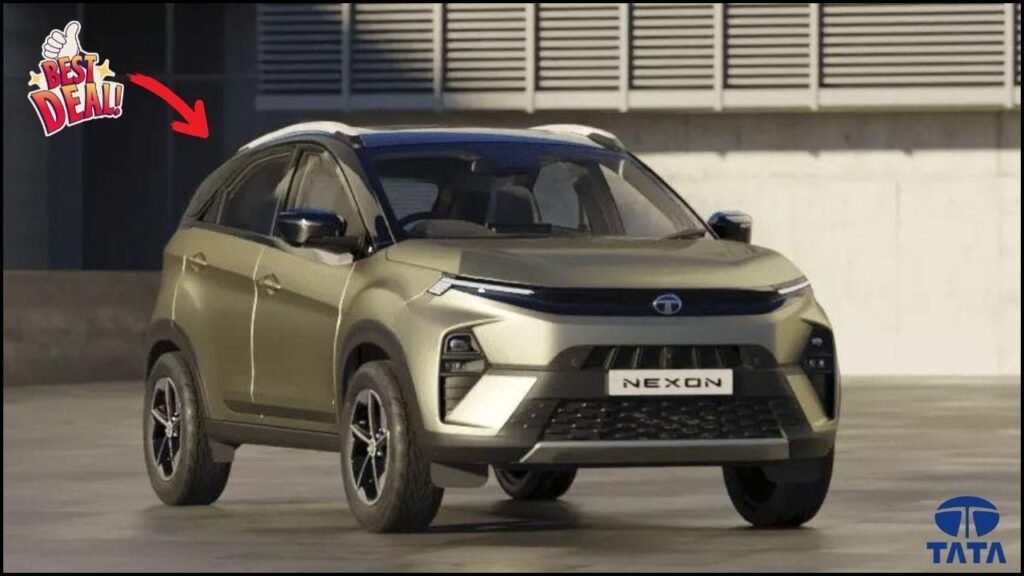
Indian automaker Tata Motors has introduced the 2025 edition of its popular compact SUV, the Tata Nexon, expanding options for urban and suburban buyers. Bookings are open nationwide with promotional offers, but claims circulating online about a “turbo-petrol engine delivering 37 km per litre” are not supported by verified manufacturer or regulatory data. The Nexon 2025 marks Tata’s continued effort to hold its leadership in the compact-SUV segment amid intense competition.
Table of Contents
The Tata Nexon’s Journey So Far
Since its debut in 2017, the Nexon has become a cornerstone of Tata Motors’ passenger-vehicle portfolio. It was among the first Indian-made SUVs to earn a five-star safety rating from the Global NCAP, reinforcing Tata’s reputation for building robust, safety-focused cars. The model has since evolved through multiple refreshes—adding connected-car features, automatic gearboxes, and a fully electric variant.
The 2025 edition introduces subtle exterior updates, new interior materials, and a continuation of Tata’s “smart design” language first seen in the Curvv concept. More importantly, it keeps the powertrain choices broad: 1.2-litre turbo-petrol, 1.5-litre diesel, and a CNG option, appealing to both performance-minded and cost-sensitive consumers.
What’s New in the 2025 Variant
Under the hood, the Nexon 2025 retains its 1.2-litre Revotron turbo-petrol engine, producing about 118 horsepower and 170 Nm of torque. Buyers can choose between a six-speed manual, six-speed AMT (automated manual transmission), or a new dual-clutch automatic introduced in higher trims. The diesel option continues to offer 113 horsepower and 260 Nm of torque, suitable for long-distance commuters.
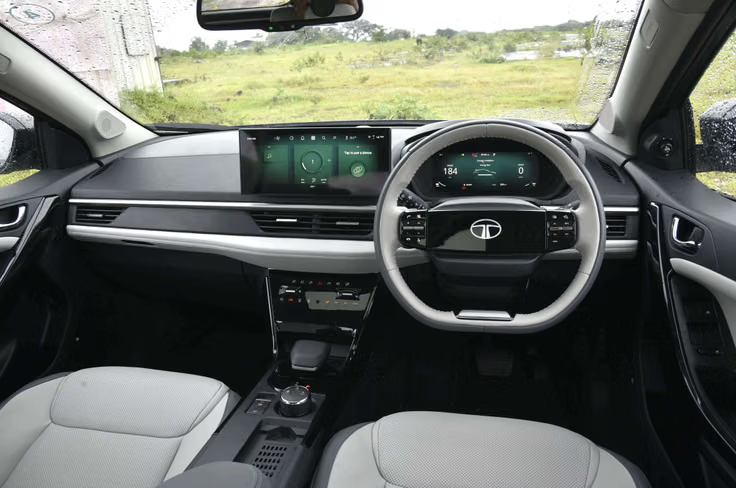
Inside, the model adds a 10.25-inch infotainment display, wireless Android Auto and Apple CarPlay, ventilated seats, an air purifier, and a digital instrument cluster. The top variants include six airbags, a 360-degree camera, and electronic stability control—features increasingly demanded by safety-conscious Indian buyers.
These updates align Tata Motors with rivals such as the Hyundai Venue, Maruti Suzuki Brezza, and Kia Sonet, which dominate India’s compact-SUV sales charts.
The Mileage Controversy: Fact vs Claim
The claim of a 37 kmpl turbo-petrol Nexon began circulating on social media and smaller automotive blogs soon after Tata announced its 2025 line-up. However, verified figures from the Automotive Research Association of India (ARAI) show that the Nexon’s petrol models achieve between 17 and 18 kmpl under standard test conditions. Real-world city driving typically yields 12 to 14 kmpl, depending on traffic and load.
Automotive engineer Dr Nikhil Joshi of the Indian Institute of Technology Delhi notes that such inflated claims are implausible. “A turbocharged petrol engine can be tuned for either performance or efficiency—but not both at extreme levels. Thirty-seven kilometres per litre is simply beyond the physics of current mass-market engines,” he said.
Even diesel and hybrid competitors rarely exceed 25 kmpl. Tata Motors has not issued any statement endorsing the 37 kmpl figure. Company brochures and official websites continue to list ARAI-verified numbers within the conventional range.
Offers and Booking Details
Tata Motors’ authorised dealers confirm that bookings are open nationwide for all Nexon 2025 variants, requiring a ₹ 21,000 token amount. Ongoing offers include cash discounts of up to ₹ 20,000, exchange bonuses, and corporate benefits. These vary by location and stock availability.
Industry observers say such promotions are typical around model-year transitions as automakers clear older inventory. “The Nexon remains one of Tata’s best-selling cars. Aggressive offers help sustain momentum before festive-season demand,” said Ravi Menon, senior analyst at Mumbai-based Motoring India Insights.
Broader Market Context and Competition
The compact-SUV segment is now India’s largest automotive category, accounting for roughly 20 percent of total passenger-vehicle sales in 2024–25. Consumers are drawn to its balance of comfort, space, and affordability.
The Hyundai Venue offers refined engines and connected-car features, while the Maruti Brezza boasts strong after-sales support and hybrid efficiency. The Kia Sonet differentiates itself with premium interiors. The Tata Nexon, on the other hand, has leveraged its design, safety credentials, and electric variant to attract a wide buyer base.
According to SIAM data (Society of Indian Automobile Manufacturers), Tata Motors sold more than 40,000 units of the Nexon in the first quarter of FY 2025, maintaining its position among India’s top three SUVs.
The Policy and Environmental Angle
India’s auto market is preparing for stricter BS-VI Stage II emission standards, which came into force in April 2023 and are tightening further in 2025. These norms push carmakers to improve combustion efficiency and reduce particulate matter.
Environmental economist Dr Rekha Bose explains: “High mileage claims often appeal to eco-conscious consumers, but the real test is whether the vehicle meets emission standards and delivers consistent fuel economy in daily driving.”
Tata Motors has signalled its commitment to sustainability through its Nexon EV range, which remains India’s best-selling electric SUV. The 2025 ICE (Internal Combustion Engine) Nexon serves as a bridge product until the company expands its hybrid and electric portfolio.
What Buyers Should Know Before Booking
- Check Variant Specs: Confirm engine type, gearbox, and fuel system in official Tata Motors literature or at authorised showrooms.
- Ask for ARAI Certificates: These list the officially tested mileage. Do not rely solely on third-party blogs or advertisements.
- Evaluate Offers Carefully: Cash discounts and exchange bonuses differ across dealerships; request written confirmation.
- Test Drive: Compare ride quality, cabin comfort, and braking response before finalising.
- Consider Long-Term Ownership Costs: Maintenance, fuel price trends, and resale value often matter more than an inflated mileage claim.
Automotive consumer forums suggest the Nexon 2025 petrol automatic variant offers a balanced mix of power and efficiency, averaging 13–14 kmpl in city use and 18 kmpl on highways—figures aligning with realistic expectations.
The Road Ahead for Tata Motors
Tata’s strategy increasingly emphasises localisation, technology partnerships, and electrification. The company plans to introduce next-generation hybrid and fully electric SUVs by 2026, leveraging learnings from the Nexon platform.
Auto journalist Pranav Menon says the Nexon’s sustained popularity reflects Tata’s grasp of Indian buyer psychology: “Safety, solid build, and value drive loyalty more than headline mileage figures.”
By continuing to innovate responsibly—without overstating performance metrics—Tata Motors could reinforce consumer trust while positioning itself strongly for an electric future.
Maruti Suzuki Wagon R 2025 with 32KM/L Mileage Starts at ₹2.39 Lakh- Massive Discount Offers
Conclusion
The Tata Nexon 2025 represents evolution rather than revolution. It offers updated design, comfort, and features while maintaining its core strengths of safety and practicality. Yet, viral claims of a turbo-petrol variant delivering 37 km per litre are unsupported by verified data.
As India’s SUV market matures, transparency about efficiency and performance will remain crucial for consumer confidence. Prospective buyers should verify specifications, rely on official sources, and remember: authentic efficiency is measured on the road, not in rumours.