

Ford Motor Company has officially launched the Ford Puma 2025, introducing a refreshed compact SUV that blends affordable electrification, modern design, and strategic launch offers. With discounts and government-backed EV incentives across Europe, Ford aims to capture a larger share of the fast-growing urban SUV segment.
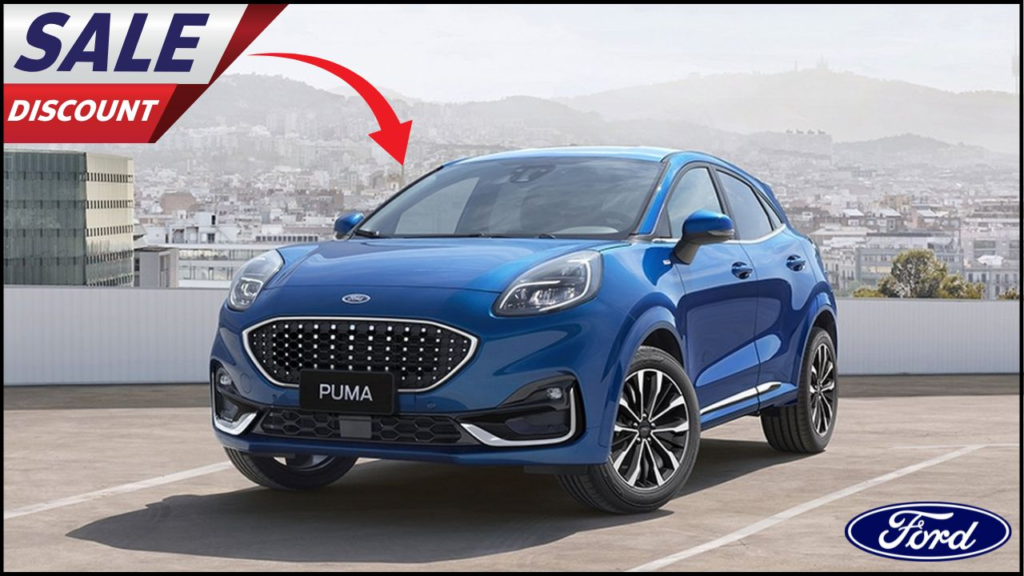
The vehicle’s petrol-hybrid and fully electric variants will be available across the United Kingdom and the European Union, with deliveries expected from late November 2025. Initial incentives include cash rebates, home charger installation, and subsidised financing, making the Puma one of Ford’s most aggressively priced launches in recent years.
Table of Contents
Evolution of the Puma: From Coupe to Electric SUV
The Ford Puma nameplate was first introduced in 1997 as a compact sports coupe. It was discontinued in 2002 but revived in 2019 as a small crossover SUV, responding to growing demand for compact urban utility vehicles. Over the years, the Puma has become one of Ford’s best-selling models in Europe, thanks to its combination of sporty design, efficiency, and everyday usability.
The 2025 model marks the first time the Puma is offered as a fully electric vehicle, signaling Ford’s commitment to phasing out internal combustion engine sales in Europe by 2030.
Pricing, Launch Offers, and Government Incentives
- Starting Price (UK): £30,000
- Launch Incentives: Up to £3,750 EV grants
- Extras: Free home charger installation and 10,000 miles of free charging (Power Promise)
- Availability: Orders open across the EU and UK; deliveries from November 2025
“This launch positions Puma as one of the most accessible EVs in its class,” said Lisa Brankin, Ford’s Managing Director for the UK and Ireland. “We want to make the transition to electric mobility practical and affordable.”
The incentives align with the UK’s Plug-in Vehicle Grant, making the Puma Gen-E attractive to urban EV adopters. Dealers are also offering early-bird benefits such as accessory packs and lower interest rates.
Interior and Technology: A Modern Urban SUV
The Puma 2025’s cabin features a 12.8-inch fully digital instrument cluster and a 13.2-inch SYNC infotainment screen. The system supports wireless Android Auto and Apple CarPlay, voice commands, and over-the-air updates.
Premium trims include a panoramic sunroof, ventilated seats, a 360-degree camera system, and advanced ambient lighting. Ford has also focused on noise insulation, resulting in a quieter cabin than previous models.
“Ford has clearly invested in improving the in-cabin experience,” said Ananya Bhattacharya, automotive editor at AutoCar India. “The new infotainment and comfort upgrades bring it on par with segment leaders.”
Performance and Efficiency
The Puma Gen-E comes with a 72 kWh battery pack, delivering up to 400 km of WLTP range on a single charge. Fast charging allows 10–80% top-up in approximately 28 minutes using a 150 kW DC charger.
The hybrid variant features Ford’s updated 1.0-litre EcoBoost engine paired with a 48-volt mild hybrid system, offering improved fuel economy without sacrificing performance. Both variants include regenerative braking systems to enhance efficiency.
According to Guidehouse Insights, Ford’s move to expand electrified Puma models comes as EV affordability becomes a key market battleground in Europe.
Competitive Landscape: Puma vs Rivals
The Puma 2025 will compete directly with:
- Hyundai Kona Electric – Range: 418 km, starting at £31,000
- Volkswagen T-Roc – Petrol only, starting at £29,500
- Peugeot 2008 Electric – Range: 402 km, starting at £30,800
“Ford is striking a balance between price and features,” said Dr. Priya Menon, automotive economist at the London School of Economics. “That makes the Puma particularly attractive to price-sensitive EV buyers.”
Policy Context: EV Incentives and Green Mobility
The launch aligns with Europe’s broader net-zero emission goals. The EU plans to ban sales of new petrol and diesel cars by 2035, while the UK has set a 2030 deadline for most ICE vehicles.
Governments are supporting this transition through purchase incentives, tax benefits, and investments in charging infrastructure. Ford’s launch offer leverages these policies to lower entry barriers for buyers.
“Such incentives are not just marketing tools,” said Jonas Becker, policy analyst at the European Automobile Manufacturers’ Association. “They’re crucial for achieving climate goals.”
Consumer Segment: Targeting Urban Families and First-Time EV Buyers
Ford is clearly aiming the Puma at urban professionals, young families, and first-time EV buyers who value affordability and practicality. Compact dimensions, efficient powertrains, and strong connectivity features make the Puma particularly well-suited for European cities.
Early test drives reported by Top Gear and AutoExpress highlight responsive handling, smooth ride quality, and intuitive digital controls as major strengths.
Outlook for the Indian Market
While Ford exited mass production in India in 2021, there is growing speculation that the Puma Gen-E could enter India through Completely Built-Up (CBU) imports in late 2026.
However, high import duties — currently 60% to 100% on CBUs — would make pricing a major challenge. Experts suggest that local assembly or partnerships would be necessary to make the vehicle competitive.
“India’s EV market is growing rapidly, but it remains price sensitive,” said Raghav Sharma, an auto industry analyst at CRISIL. “If Ford decides to re-enter, it must adapt its pricing and after-sales strategy carefully.”
India has rolled out EV incentives under the FAME-II scheme and is expanding charging infrastructure, making it a potential future market for Ford’s EV lineup.
Range Rover 2025 Launched – Ultra-Powerful SUV with 615HP & Hybrid Tech at a Jaw-Dropping Price!
Early Reactions and Future Prospects
Initial media drives and consumer feedback indicate strong interest in the Puma Gen-E. Reviewers have praised its design, driving dynamics, and accessible pricing, though some have called for faster charging options and broader fast-charging network coverage.
Ford aims to sell more than 80,000 units of Puma Gen-E in its first year, contributing significantly to its EV sales targets in Europe.
Conclusion: A Strategic Launch at a Critical Time
The Ford Puma 2025 Launch Offer is more than a pricing promotion — it reflects Ford’s strategic push into accessible electrification. By combining incentives, technology upgrades, and a strong brand legacy, Ford hopes to secure a firm foothold in the increasingly competitive compact SUV market.
If successful, the Puma could set a blueprint for similar EV launches in emerging markets, including India, in the coming years.
