Dynamic programming is not merely a technical skill but a fundamental discipline in computer science that equips students with the crucial ability to approach and conquer complex challenges, thereby unlocking professional opportunities and securing their future careers through technical interviews and campus placements.
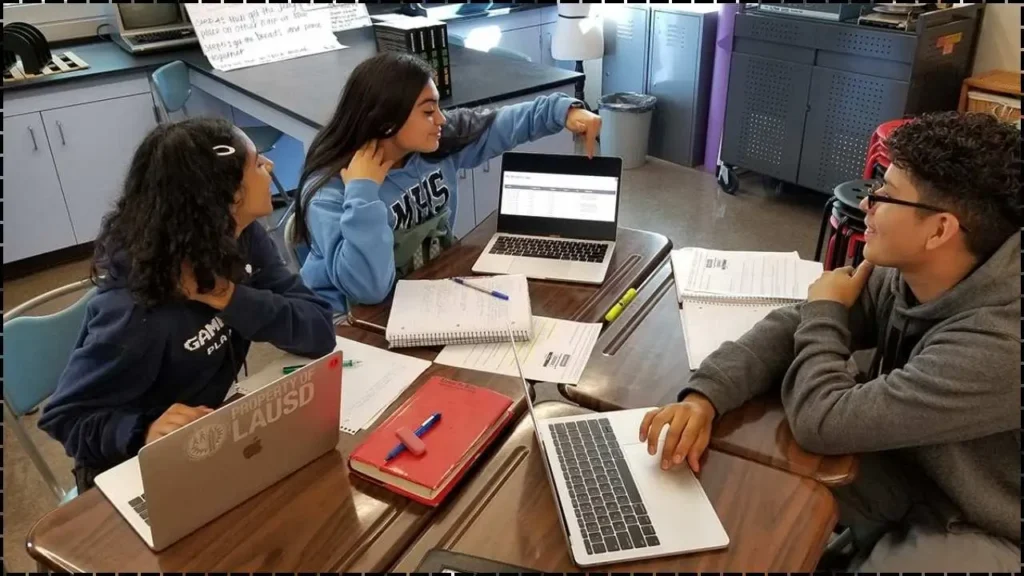
By mastering key problems, students are learning to optimize algorithms in a way that conserves resources and improves efficiency, fostering a problem-solving mindset that is not just about passing a test, but about empowering them to innovate and create better, more efficient technological solutions that ultimately serve human needs and advance society.
Solving these ten dynamic programming problems prepares students for rigorous placement interviews, strengthening both problem-solving skills and coding efficiency. Regular practice, combined with online resources like GeeksforGeeks, LeetCode, and AlgoMonster, ensures proficiency in these essential algorithms.
Table of Contents
1. Fibonacci Sequence
Problem: Compute the nth Fibonacci number efficiently.
Importance: Introduces overlapping subproblems and optimal substructure—core DP concepts.
Approach: Start with recursion; optimize using memoization or tabulation.
2. 0/1 Knapsack Problem
Problem: Maximize total value of items within a given weight limit.
Importance: Demonstrates decision-making between including or excluding items for optimal solutions.
Approach: Build a DP table tracking maximum value for each weight capacity.
3. Longest Common Subsequence (LCS)
Problem: Find the longest subsequence shared between two sequences.
Importance: Used in file comparison, version control, and bioinformatics.
Approach: Use a 2D DP table storing subsequence lengths for all string prefixes.
4. Edit Distance
Problem: Calculate minimum operations to convert one string into another.
Importance: Critical in spell checking, NLP, and text correction algorithms.
Approach: Construct a DP table representing conversion costs for substring pairs.
5. Coin Change Problem
Problem: Determine minimum coins required to make a target amount.
Importance: Illustrates counting combinations and optimal substructure in DP.
Approach: Maintain a DP array storing minimum coins needed for each amount.
6. Longest Increasing Subsequence (LIS)
Problem: Identify the longest subsequence with strictly increasing elements.
Importance: Useful in stock analysis, scheduling, and time-series applications.
Approach: Use a DP array to store LIS length ending at each index; update based on previous indices.
7. Matrix Chain Multiplication
Problem: Find the most efficient multiplication order for a chain of matrices.
Importance: Shows optimization in multi-step computation scenarios.
Approach: Develop a DP table for minimum multiplication cost of all matrix ranges.
8. Rod Cutting Problem
Problem: Maximize revenue by cutting a rod and selling the pieces.
Importance: Classic problem demonstrating optimal substructure and DP application.
Approach: Use a DP array to track maximum revenue for every rod length.
9. Word Break Problem
Problem: Segment a string into valid dictionary words.
Importance: Essential for text processing and NLP tasks.
Approach: Maintain a DP array indicating whether a substring can be segmented successfully.
10. Maximum Subarray Sum (Kadane’s Algorithm)
Problem: Find contiguous subarray with the largest sum.
Importance: Teaches linear-time optimization in subarray problems.
Approach: Track maximum sum ending at each position and overall maximum dynamically.
Expert Insights
Dr. Priya Sharma, a senior instructor at Coding Ninjas, notes:
“Dynamic programming mastery not only improves algorithmic thinking but significantly boosts placement prospects at top tech companies.”