

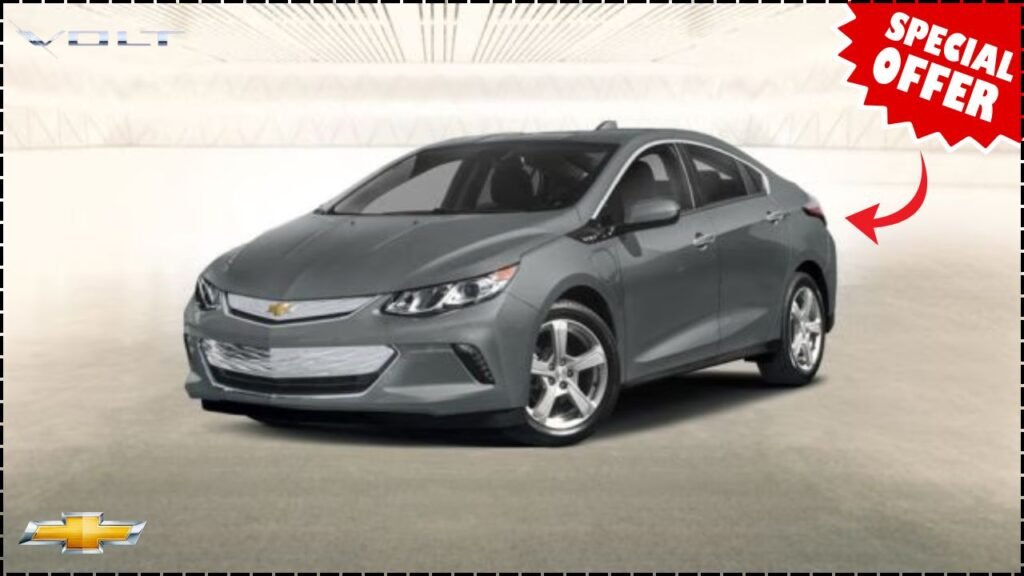
The VOLT EV has captured widespread public attention after online claims suggested that the model may launch in January 2026 with an estimated 310 km range. However, no major automaker, regulatory authority, or industry body has confirmed the existence of this vehicle, prompting concerns about source reliability and consumer clarity.
Table of Contents
Early Reports and Rising Public Interest
Several small websites and digital publications have circulated reports describing the VOLT EV as a budget-friendly electric car to be introduced in January 2026. These articles often reference features such as a 310 km range, competitive pricing, and “special launch offers.” Despite their popularity on social media platforms, these claims appear to originate from promotional blogs rather than verified manufacturer announcements.
Leading outlets such as Reuters, BBC News, Autocar India, and The Economic Times Auto have not covered the VOLT EV. Industry analysts emphasise that recognised manufacturers typically issue press releases or public confirmations before new models enter testing or certification.
Dr. Sanjay Mehta, an automotive policy researcher at the Indian Institute of Technology (IIT) Delhi, said in an email that “unverified model announcements tend to surface during periods of heightened consumer interest. The India EV market is growing quickly, and this sometimes encourages the spread of premature or inaccurate information.”

No Confirmation From Recognised Automakers
India’s major electric vehicle manufacturers, including Tata Motors, Mahindra Electric, Hyundai Motor India, and MG Motor India, have not announced a model resembling the VOLT EV in their upcoming product line-ups or investor briefings. The Ministry of Heavy Industries, which oversees national EV policies and incentive programmes, has also made no reference to the vehicle.
Additionally, a search of publicly accessible trademark databases maintained by the Controller General of Patents, Designs and Trade Marks (CGPDTM) shows no confirmed trademark application under the name “VOLT EV.” Experts note that such filings typically precede any legitimate launch timeline.
Without official documentation, analysts say the source of the VOLT EV branding remains uncertain. Some speculate it may be linked to an emerging startup, though no EV startup has publicly claimed ownership of the name.
Why the Claim Has Gained Attention in India
Despite limited verification, reports about the VOLT EV have spread quickly due to strong consumer interest in mid-range electric cars. According to the 2024 International Energy Agency (IEA) Global EV Outlook, India’s EV sales have grown significantly, supported by central and state incentives, rising fuel prices, and increased private-sector investment.
A 310 km range places the hypothetical VOLT EV within the segment currently dominated by models like the Tata Tiago EV, MG Comet, and Citroën eC3. These vehicles are popular among urban buyers looking for cost-efficient, daily-use transport.
Ms. Ritika Sharma, a mobility analyst at the Council on Energy, Environment and Water (CEEW), explained that “Indian consumers prioritise affordability, range reliability, and low maintenance costs. Any electric car positioned within these parameters can attract attention quickly, even in the absence of an official announcement.”
Understanding India’s EV Certification and Launch Process
A key gap in the VOLT EV claims is the lack of evidence of any testing or certification.
In India, electric vehicles undergo a multi-stage regulatory process involving:
- Automotive Research Association of India (ARAI) certification
- Bureau of Indian Standards (BIS) compliance
- Safety testing under recent battery norms introduced after 2022 fire incidents
- Homologation for roadworthiness
These steps are typically documented and publicly listed before a product’s market launch. Analysts note that no such records currently mention the VOLT EV.
Furthermore, the Government of India’s FAME II scheme (Faster Adoption and Manufacturing of Hybrid and Electric Vehicles) offers subsidies only to certified EV models meeting specific localisation criteria. As the VOLT EV does not appear on the FAME II portal, analysts say an early 2026 launch looks unlikely.
Charging Infrastructure and Market Context
If a model like the VOLT EV were eventually introduced, it would enter a growing but varied charging ecosystem. India currently has more than 12,000 public charging stations, according to the Bureau of Energy Efficiency (BEE), with significant expansion planned under both public and private initiatives.
Cities such as Delhi, Bengaluru, Pune, and Chennai have experienced faster infrastructure development, making them stronger markets for new EV launches. For consumers in smaller cities, availability of consistent charging remains a crucial factor.
To compete effectively, analysts say any new EV must demonstrate compatibility with India’s emerging fast-charging standards and provide a reliable battery management system.
Why Unverified EV News Often Goes Viral
Experts suggest three reasons:
- High demand for affordable EVs encourages consumers to pay attention to even speculative announcements.
- Limited competition in the budget EV segment makes any rumoured model seem promising.
- Digital content platforms often amplify early rumours without verifying the manufacturer source.
Dr. Mehta adds that “the speed at which such claims spread reflects both consumer demand and the need for more transparent communication channels in the EV industry.
Questions That Remain Unanswered
Who is behind the VOLT EV brand?
No established automaker or startup has formally taken ownership of the name.
Is the claimed 310 km range feasible?
Yes, for compact EVs, but certification would be required to verify the figure.
Are launch offers or discounts genuine?
There is no evidence these promotions exist.
Will India see more EV announcements in 2025–26?
Analysts expect several new models from Tata, Mahindra, MG, Hyundai, and Chinese manufacturers exploring joint ventures in India.
What Consumers Should Watch For
Experts recommend monitoring:
- Manufacturer press releases
- ARAI certification lists
- FAME II eligible vehicle lists
- Major events such as Auto Expo and Bharat Mobility Global Expo
- Coverage by international news agencies such as Reuters or AFP
Documented confirmation from any of these sources would provide stronger evidence of the VOLT EV’s legitimacy.
Conclusion
The VOLT EV has generated considerable online attention, driven by rising interest in affordable electric mobility and claims of a 310 km range. However, in the absence of official confirmation from recognised automakers or regulators, these reports remain unverified. India’s expanding EV market continues to attract new entrants, but experts emphasise the importance of relying on validated information and certified documentation. Until clearer evidence emerges, the VOLT EV should be regarded as a speculative development rather than a confirmed model.
