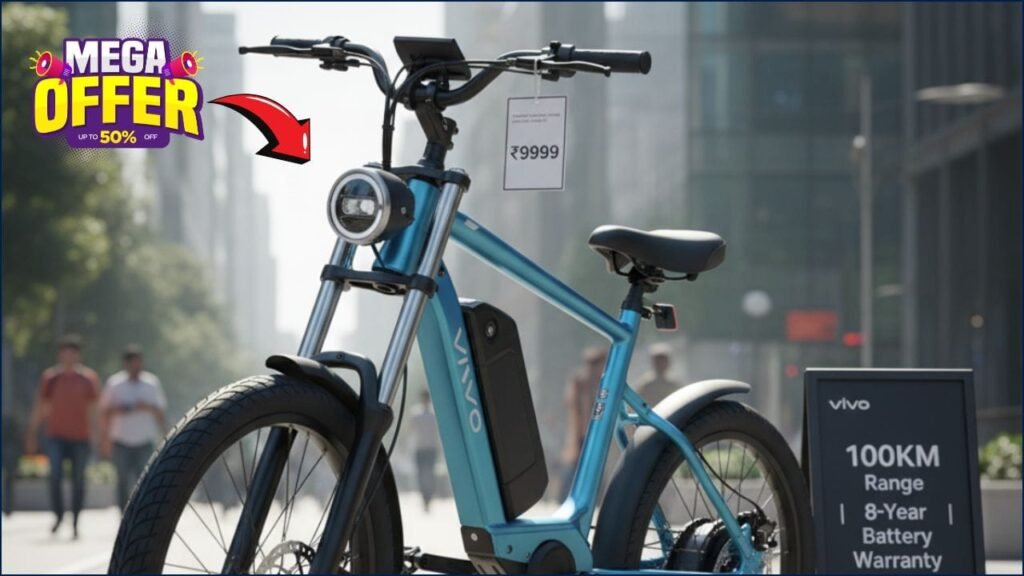
Vivo’s entry into the electric cycle market has sparked considerable attention with claims of impressive features. The cycle is touted to offer a 180 km range and a top speed of 55 km/h, while the battery comes with an 8-year warranty. However, questions remain about the veracity of these bold claims and the real-world performance of the product.
Table of Contents
Vivo Electric Cycle: A Game-Changer in E-Mobility?
Vivo’s much-anticipated electric cycle has generated significant buzz, promising a blend of long-range capability, high-speed performance, and a durable battery life. The cycle’s 180 km range and 55 km/h speed are touted as breakthrough specifications, offering an alternative for urban commuters and long-distance cyclists. The battery’s 8-year warranty further strengthens its appeal, suggesting longevity and reliability in a growing market.
However, experts and industry insiders have raised concerns about the feasibility of such claims. According to Dr. Arvind Mehta, a transportation specialist at the Indian Institute of Technology (IIT), “While the figures sound appealing, electric cycles typically don’t reach such high speeds without being classified as motorized vehicles, which would require registration and licensing under current regulations.”
Understanding the Key Features of Vivo Electric Cycle
- 180 km Range:
The promise of a 180 km range on a single charge is one of the most appealing aspects of the Vivo electric cycle. Industry standards for electric bicycles generally fall between 50-100 km per charge, depending on battery size, motor efficiency, and terrain. The 180 km claim may be based on ideal testing conditions, which may not reflect typical usage scenarios in urban areas with varying terrains. - 55 km/h Speed:
55 km/h speed is another bold claim. Most electric cycles are limited by law to a maximum speed of 25-30 km/h to comply with local regulations for non-motorized cycles. Any cycle exceeding this threshold is generally classified as an electric scooter or moped, requiring registration and a driver’s license. Vivo’s cycle, if true to these specifications, may face legal challenges in certain jurisdictions. - 8-Year Battery Warranty:
Battery longevity is a critical factor for any electric vehicle, including cycles. An 8-year warranty would set Vivo apart in a market where battery warranties typically last between 2-5 years. The cycle’s advertised long battery life may suggest advanced lithium-ion technology or other innovations, but the fine print of the warranty details should clarify what is covered and under what conditions.
Are the Claims Feasible?
Given the rapid advancements in the electric vehicle (EV) sector, Vivo’s claims are not entirely out of the realm of possibility, but they remain highly ambitious. Industry analysts believe that while a 180 km range could be achieved in ideal conditions, it may not be practical for the average commuter. Furthermore, the 55 km/h speed is rare in the e-cycle category, and could potentially place the product under different legal classifications, particularly in countries like India, where regulations for e-cycles are stringent.
“We need to look at factors such as the motor’s power output, the total weight of the bike, and the type of terrain the cycle will be used on,” said Prashant Kumar, a senior engineer with Indian Electric Vehicles Ltd. “If the cycle is intended for urban commuting, achieving 55 km/h might not be sustainable on an ongoing basis without considerable safety concerns.”
The Legal Implications
If Vivo’s electric cycle does indeed hit speeds of 55 km/h, it would exceed the legal limits for electric bicycles in several countries, including India. According to the Ministry of Road Transport and Highways (MoRTH), cycles with speeds over 25 km/h are classified as electric motorcycles, requiring registration and compliance with motor vehicle laws. This may create complications for Vivo’s sales strategy, particularly if the product is marketed as a non-motorized bicycle.
Additionally, such high speeds may necessitate the addition of safety features like advanced braking systems, lighting, and helmets, which could affect the overall cost of the cycle.
The Electric Bicycle Market in India: A Booming Industry
The electric bicycle market in India has been witnessing steady growth in recent years, driven by rising fuel prices, growing environmental concerns, and the increasing popularity of sustainable transportation options. With rising pollution levels in cities like Delhi, Mumbai, and Bangalore, consumers are looking for alternatives to traditional motor vehicles, and e-cycles present a practical solution.
According to a report by NITI Aayog, electric vehicles (EVs) in India are expected to account for 30% of total vehicle sales by 2030, with electric two-wheelers playing a pivotal role in this transformation. Companies like Hero Electric, Okinawa, and Ampere have already established a foothold in the market, offering e-bikes with varied features and price points.
Vivo’s entry into the market is timely, but the real question remains: how does it compare to the competition? Hero Electric, for example, has a range of electric cycles that offer a maximum speed of 30 km/h and a range of 80-100 km. Vivo’s 180 km range and 55 km/h speed may give it a competitive edge, but the practicalities of battery life and legal classification could determine whether it can succeed in the crowded market.
Government Support and Regulatory Landscape
The Indian government has provided several incentives to promote electric vehicles, including subsidies under the Faster Adoption and Manufacturing of Hybrid and Electric Vehicles (FAME) scheme. These subsidies aim to reduce the upfront cost of electric bikes, making them more accessible to a wider segment of the population. However, the market still faces challenges such as charging infrastructure, battery availability, and consumer awareness.
Vivo’s electric cycle could benefit from these government policies, but the regulatory environment for high-speed e-bikes remains uncertain. If Vivo’s cycle exceeds the speed limits for non-motorized vehicles, it may need to comply with more stringent motor vehicle regulations.
Environmental Impact: A Sustainable Alternative?
One of the key selling points of electric bicycles is their environmental impact. With India facing severe air pollution and traffic congestion, e-bikes present an eco-friendly alternative to traditional gasoline-powered vehicles. Vivo’s electric cycle, if it offers the range and speed it claims, could become an attractive option for urban commuters seeking to reduce their carbon footprint.
Additionally, e-cycles require less maintenance than motorized vehicles, further contributing to their sustainability. The adoption of electric cycles could play a crucial role in India’s efforts to meet its climate goals and reduce reliance on fossil fuels.
Consumer Experience: What Do Early Testers Say?
While the claims made by Vivo are enticing, real-world experiences from early testers will provide valuable insight into how the cycle performs under typical conditions. Ravi Kumar, an urban commuter from Bangalore, who tested a similar electric cycle, shared his experience: “I’ve tried electric cycles with up to 100 km range, and they perform well for daily commutes. But 180 km? It’s a stretch for daily use unless you’re traveling on highways. Plus, the speed is concerning in urban traffic.”
Kumar’s insights underline the importance of practicality and user experience in shaping the success of new electric vehicles.
What’s Next for Vivo and the E-Bike Industry?
Vivo’s new electric cycle, if it lives up to its claims, could redefine expectations for e-mobility products in India and beyond. However, its commercial success will depend on multiple factors, including regulatory approval, real-world performance, and consumer reception. As of now, the cycle remains in the spotlight, with many eagerly awaiting more detailed specifications, official test results, and user reviews.
As the market for electric vehicles continues to expand, Vivo’s attempt to bridge the gap between electric scooters and pedal-powered bicycles could help shape the future of eco-friendly transportation in urban areas.
Conclusion
Vivo’s electric cycle promises revolutionary features, including a 180 km range and 55 km/h speed, setting high expectations for the evolving e-mobility market. While these claims are exciting, they remain unverified, and questions surrounding their practicality and legal implications persist. As the industry watches closely, Vivo’s success will hinge on the cycle’s performance, regulatory compliance, and market reception.