If you’ve been waiting for the next big Corvette shakeup, the 2026 Chevrolet Corvette C9 Concept is the kind of eye candy that instantly starts arguments in group chats. This 2026 Chevrolet Corvette C9 Concept is not a production car, but it’s a loud hint that GM is actively exploring what a future American supercar could look like when design teams get real freedom. What makes this reveal feel special is the way GM is doing it: not one concept, but a whole series from different studios around the world, each putting its own spin on Corvette DNA. That “showcase” approach is exactly why supercar fans are paying attention, because it suggests GM is testing bold ideas in public before locking in the next era of Corvette design. And for anyone who loves the idea of a Corvette that can hunt supercars on design, aero, and tech, this is the most interesting “first look” moment in years.
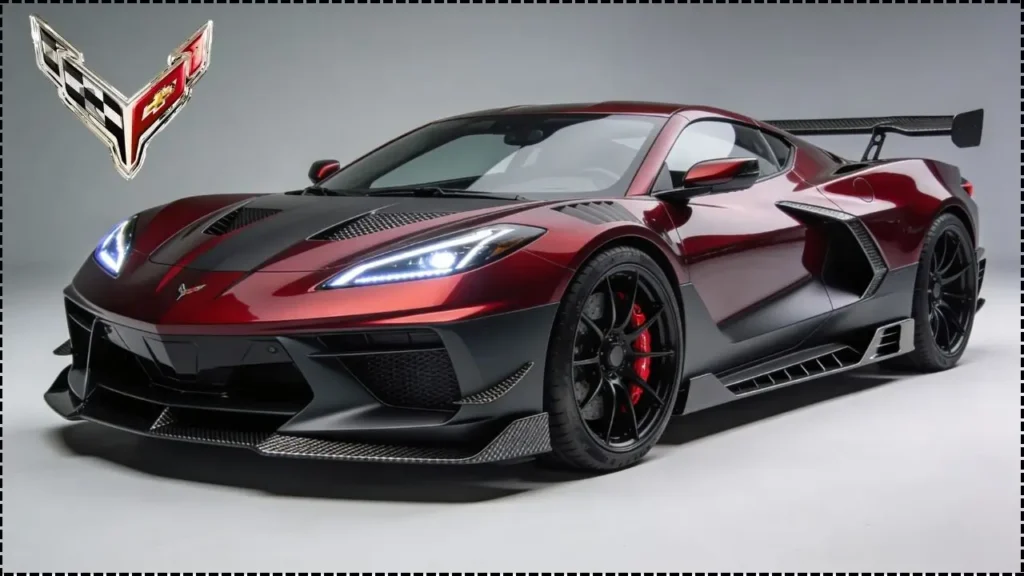
The twist is that the C9 talk is happening alongside a separate California-created study that’s badged internally as a “C10” style concept, essentially looking beyond the next generation. In other words, GM isn’t just teasing a single future path. It’s exploring multiple future Corvettes at once, then using the public reaction and internal evaluation to figure out what deserves to live on. Across these concepts, the electric theme is impossible to miss. The UK studio vision leans into the freedom EV packaging can give designers, especially when you’re chasing extreme aerodynamics and a low, clean silhouette. The California concept goes the same way, imagining a fully electric setup to enable new proportions, new underbody airflow ideas, and a more advanced cockpit vision.
Table of Contents
2026 Chevrolet Corvette C9 Concept
| Overview | Details |
|---|---|
| Global concept plan | A series of Corvette concepts from different GM design studios, intended to explore multiple directions before a final, more production-relevant vision emerges |
| UK studio role | A European-led design study focused on hypercar proportions and heavy aero experimentation |
| California studio role | A dramatic SoCal-flavored Corvette vision with tunnels, ducts, and a highly technical lower body |
| Production intent | Design exploration rather than a direct “this is the next Corvette” reveal |
| Electric theme | Both concepts imagine EV propulsion to unlock packaging, aero, and interior possibilities |
| Aero strategy | Extensive use of airflow channels, underbody shaping, and diffuser-focused downforce rather than relying only on huge wings |
| Battery packaging idea | A T-shaped battery approach is imagined to keep seating low and maintain supercar proportions |
| Interior direction | A futuristic cockpit idea with an immersive, digital-first driver experience rather than a traditional show-car cabin |
| Big idea | Corvette design is going global, more experimental, and more “hypercar” in how it blends function with style |
At the same time, GM has been careful with the messaging: concepts can be electric without being a promise that the next production Corvette must be an EV. The takeaway is simple. GM is preparing for an electric performance future while keeping space open for the V8 legacy that made the Corvette famous.
What This Means For Real Corvettes In 2026
It’s easy to get swept up by concepts and forget the production Corvette is still evolving right now. That’s the interesting part of this moment: GM can push wild styling studies in parallel while improving the real-world car that buyers can actually drive daily.
- For 2026, the production Corvette story leans heavily into the driver environment. Even if you never care about virtual reality cockpits or fan-assisted aero, you’ll care about a cabin that feels modern, intuitive, and genuinely performance-focused. The direction is clear: more screen real estate, better visibility of performance data, cleaner control layout, and a cockpit that feels designed around the driver rather than designed around a marketing checklist.
- That matters because the C8 generation proved something important. Corvette buyers will accept change if the result feels like a better sports car. Mid-engine was once controversial, but now it’s the identity. In the same way, a more high-tech cockpit or hybrid and EV influence won’t scare people off as long as the end product still feels like a Corvette: fast, usable, and priced like it’s punching above its weight.
- The concepts also suggest something else. Future Corvettes will likely rely more on aerodynamic efficiency instead of brute-force styling add-ons. That could mean a cleaner look, better stability at speed, and less dependence on giant wings to get track-worthy downforce. Even small production carryovers like smarter underbody shaping, more functional venting, or improved cooling paths can make a big difference.
Two Tone Paint Highlights The Tech
One of the smartest things about the California concept is how it visually explains what it’s trying to do. The two tone approach isn’t just for drama. It separates the “technical layer” from the “beauty layer.” The lower portion reads like the functional skeleton of the car: suspension hardpoints, aero surfaces, channel openings, and the bits that make the car work at high speed. The upper section feels like a skin stretched tight over that engineering, giving the car its emotional silhouette while still leaving room for airflow to do its job.
This is where the Corvette’s design language starts to look more like a modern hypercar. Traditional sports cars often hide their aero and try to look clean. Hypercars tend to celebrate it. They show you where the air enters, where it exits, and how it gets managed at speed. These concepts are clearly leaning into that philosophy.
A few standout design cues that feel especially “future Corvette”:
- Deep air channels and tunnels that visually carve through the body, suggesting airflow is as important as horsepower
- A dramatic rear diffuser-focused approach, hinting at downforce created through underbody management
- A technical lower body that looks purpose-built, almost like a race car wearing a road-car shell
- A stance that prioritizes width, low height, and a planted footprint rather than classic long-hood proportions
If you’re a supercar fan, this is the part you’ll replay these cars look engineered, not decorated. Even if the production version ends up calmer, the intent is exciting.
A Fighter Jet Cockpit
- Concept interiors are always tricky. Some are gorgeous sculptures that would be impossible to manufacture. Others skip the interior altogether and focus purely on exterior proportions. The California concept leans into a third route: treat the interior as an experience, not a physical showpiece.
- So instead of a fully built cabin, the idea is presented digitally, with a cockpit that feels more like a fighter jet than a typical road car. Think augmented reality-style driver info, a performance layout that keeps focus forward, and a system that can visualize a track environment in a way that supports fast driving.
- The most interesting part is the philosophy behind it. The driver is the center of the story. The interface isn’t trying to entertain passengers with giant screens. It’s trying to make the driver faster, more confident, and more connected to the car’s performance.
- There’s also a race-car-inspired packaging idea in the background: fixed seats mounted to a rigid structure, with adjustability coming from the steering wheel and pedal box. That’s a serious-performance approach because it improves driving position consistency and can help keep the driver properly braced during high corner loads.
If even a small slice of this mindset reaches production cars, it could push Corvette interiors away from “sports car with screens” and closer to “performance machine with a cockpit.”
FAQs on 2026 Chevrolet Corvette C9 Concept
Is The 2026 Chevrolet Corvette C9 Concept A Real Production Car
No. It’s a design study meant to explore what a next-generation Corvette could become. Concepts like this usually preview themes, proportions, and technology directions rather than a finished production vehicle.
Will The Next Corvette Be Fully Electric
Not necessarily. The concepts explore electric layouts because EV packaging opens up new possibilities, but concept powertrains do not automatically confirm what the next production Corvette will use.
What Is Special About the California Corvette Concept Aerodynamics
The big idea is downforce through airflow management rather than relying only on large wings. The design emphasizes tunnels, channels, and underbody shaping that push air where it’s most useful, especially toward the rear diffuser area.
How Is The 2026 Corvette Interior Changing in The Real Lineup
The real-world 2026 Corvette direction focuses on a more modern, driver-centric cockpit with a multi-screen layout and improved access to driving and performance information. The goal is to make the cabin feel more premium and more track-ready at the same time.