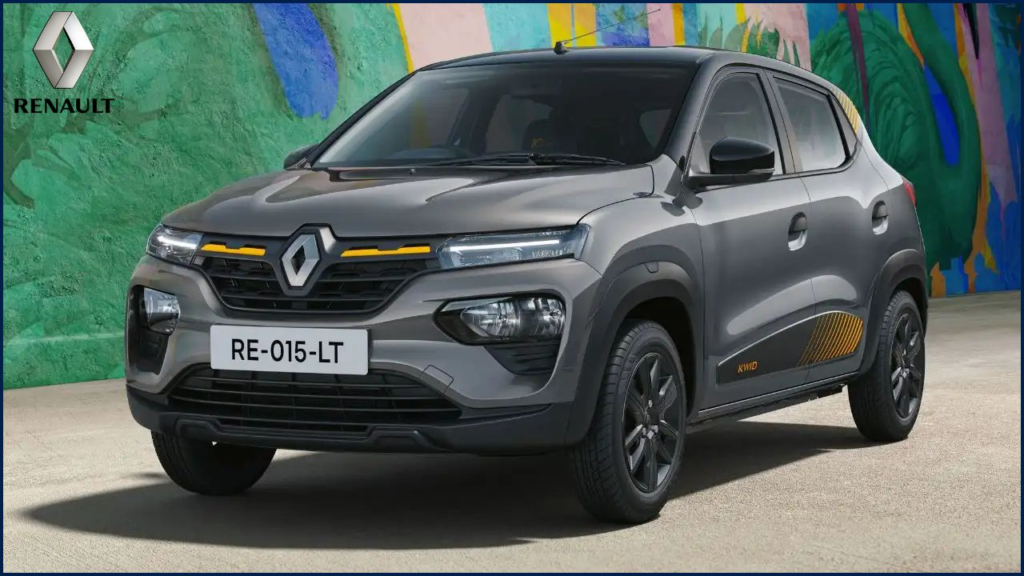
The 2025 Renault Kwid Electric, a compact electric hatchback, is set to arrive in India in early 2025 with updated styling, improved range, and targeted introductory offers. Renault India said the model aims to make electric mobility more accessible to cost-sensitive consumers, positioning itself as a key challenger in the entry-level EV segment.
Table of Contents
A Strategic Entry Into India’s Expanding EV Market
The launch marks a major step in Renault’s EV strategy for emerging markets. In a statement issued Friday, the company said the model reflects its commitment to “democratise electric mobility in India through affordability, design innovation, and localisation.”
India has emerged as one of the fastest-growing EV markets in Asia. Electric passenger vehicle sales increased by over 90% in 2023, according to the Ministry of Heavy Industries, supported by government subsidies and rising consumer interest in sustainable transport. The Kwid Electric is Renault’s first mass-market EV offering in India and is expected to play a pivotal role in its expansion strategy.
“India’s EV market is at an inflection point,” said Ankit Mehta, senior auto analyst at ICRA Limited. “Affordable electric vehicles with practical range and reliable service networks are likely to see significant uptake in the next two years.”
2025 Renault Kwid Electric Key Design and Performance Upgrades
The Renault Kwid Electric arrives with a visibly modernised exterior, featuring a sealed front grille, Y-shaped LED daytime running lamps, projector headlamps, and a revised bumper. The EV includes a centre-mounted charging inlet and enhanced aerodynamics to improve range efficiency.
Inside, Renault offers a 10.1-inch infotainment touchscreen with wireless Android Auto and Apple CarPlay, along with a 7-inch digital instrument cluster. The cabin includes upgraded upholstery, USB-C ports, and redesigned controls. Safety features are expected to include multiple airbags, ABS, ESP, hill-start assist, TPMS, and a rear camera.
Powered by a 26.8 kWh battery pack, the vehicle uses a 48 kW motor producing approximately 65 bhp and 113 Nm of torque. Renault claims a range of up to 250 kilometres on a single charge, although the figure may vary with driving conditions and AC use.
2025 Renault Kwid Electric Charging Capabilities and Ownership Benefits
The Kwid Electric supports 30 kW DC fast charging, allowing 15–80% charge in about 40 minutes. Using a 7.4 kW wallbox, the same level is achieved in under three hours, while a standard AC outlet requires up to nine hours.
To attract early adopters, Renault plans several introductory incentives, including subsidised home charger installation, extended battery warranties, and low-interest financing schemes. The automaker said it would also offer priority delivery slots to early customers.
Policy Support and Localisation Strategy
The model benefits from India’s Faster Adoption and Manufacturing of Hybrid and Electric Vehicles (FAME) scheme, which provides consumer incentives and manufacturer benefits to boost EV adoption. Renault also intends to localise key components, including the battery pack, to reduce import dependence and pricing volatility.
“The localisation of EV components is essential for sustainable pricing,” said Dr. Ritu Singh, a policy researcher at the Centre for Energy and Environment Policy Research. “Renault’s commitment to local sourcing could make the Kwid Electric eligible for additional state-level incentives.”
Several states, including Maharashtra, Gujarat, and Delhi, offer extra subsidies and road tax exemptions for electric vehicles. These policies could significantly reduce the on-road price of the Kwid Electric for consumers.
Competitive Landscape: Challenging Tata and Citroën
The Kwid Electric will enter a competitive EV segment currently dominated by the Tata Tiago EV and Citroën eC3. It will also face pressure from the MG Comet EV, which has targeted urban buyers with compact design and technology-forward interiors.
Analysts say Renault’s pricing strategy will be critical. Estimates suggest an ex-showroom price of ₹7–8 lakh for the base variant, potentially undercutting rivals by a significant margin.
“Tata’s strong early mover advantage means Renault will have to rely on pricing, dealer reach, and reliability to win over buyers,” said Raghav Bansal, auto sector expert at Nomura India.
Infrastructure and Ecosystem Readiness
India currently has over 12,000 public charging stations, but coverage is uneven, with a heavy concentration in urban centres. Renault is reportedly in talks with multiple charging network operators to offer bundled charging benefits to Kwid Electric buyers.
“EV adoption is not just about the car,” said Anjali Sharma, spokesperson for EV Infra India, an industry consortium. “It’s about the charging ecosystem. Partnerships between automakers and infrastructure providers can significantly accelerate uptake.”
Renault may also provide access to charging network subscriptions, similar to bundled offers seen in European EV markets.
Global Strategy and Renault’s EV Track Record
Renault’s entry into India’s EV market builds on its global EV experience. The company’s Zoe was one of Europe’s best-selling electric cars for several years, while its Dacia Spring EV serves as the base architecture for the Kwid Electric. This platform has been tested in multiple markets, giving Renault a mature foundation for local adaptation.
Renault also partners with Nissan under the Renault-Nissan Alliance, which enables cost-sharing and joint development. Analysts believe this could give the automaker an edge in scaling production and controlling costs in India.
Consumer Sentiment and Expert Views
Surveys by the Society of Indian Automobile Manufacturers (SIAM) show growing interest in EVs among middle-income buyers, especially for daily commutes. Range anxiety remains a key concern, but improved charging infrastructure and falling battery costs are shifting perceptions.
“Vehicles like the Kwid Electric can be game changers if they balance affordability with trust,” said Meera Krishnan, EV consumer researcher at IIT Delhi. “The brand’s reputation and after-sales network will play a decisive role.”
Future Outlook and Next Steps
Renault has not announced an exact launch date but confirmed that pre-bookings will begin in early 2025. The model will be assembled locally, with production likely starting at the company’s facility in Tamil Nadu. Renault also hinted at future EV models, including compact SUVs, as part of a broader India strategy.
Industry experts say the Kwid Electric could play a pivotal role in democratising EV adoption in semi-urban and rural markets, where pricing and practicality are decisive factors.
MG Windsor EV 2025 Bumper Sale: Premium Electric SUV at Festive Offer Price!
Concluding Paragraph
The 2025 Renault Kwid Electric blends global EV expertise with an India-first strategy focused on affordability, localisation, and ecosystem readiness. Its success will depend on how effectively Renault leverages its pricing strategy, builds consumer trust, and navigates a competitive market. If executed well, the model could significantly expand India’s entry-level EV market and accelerate the country’s electrification goals.